Iteration

Testing, Learning Refining

Why Usability Testing Is Worth It

Why Usability Testing Is Worth It

Why Usability Testing Is Worth It

User testing process

User testing process

User testing process

Usability testing methods

Usability testing methods

Usability testing methods

Test events

Test events

Test events

Why Usability Testing Is Worth It

In usability testing, we check whether the concept matches reality. Through structured tests with real users, we validate prototypes and processes, identify risks early, and provide evidence for usable solutions.

Why Usability Testing Is Worth It

In usability testing, we check whether the concept matches reality. Through structured tests with real users, we validate prototypes and processes, identify risks early, and provide evidence for usable solutions.

Why Usability Testing Is Worth It

In usability testing, we check whether the concept matches reality. Through structured tests with real users, we validate prototypes and processes, identify risks early, and provide evidence for usable solutions.

Replace assumptions with facts

Even the best team can’t think for every user. Tests show where real people behave differently than expected and whether the interaction concept works — in prototypes as well as in existing products. This makes blind spots visible before resources are funneled in the wrong direction.

Increase acceptance and adoption

Prototypes validated by real users build trust. Development teams gain objective decision-making foundations instead of opinions, and investments in UX initiatives are justified by measurable evidence. Tests make design decisions transparent and reduce internal discussions.


Compliance evidence for regulated products

In regulated industries (medical devices, laboratory equipment), user testing is part of the required evidence documentation. It provides objective proof of usability and use-related risks—essential for IEC 62366-1 and usability engineering files.

Compliance evidence for regulated products

In regulated industries (medical devices, laboratory equipment), user testing is part of the required evidence documentation. It provides objective proof of usability and use-related risks—essential for IEC 62366-1 and usability engineering files.

Identify risks early and reduce costs

Fixing errors in the finished product costs many times more than testing at the prototype stage. User tests uncover critical weaknesses before they become expensive.

Identify risks early and reduce costs

Fixing errors in the finished product costs many times more than testing at the prototype stage. User tests uncover critical weaknesses before they become expensive.

User testing process

User testing process

1

Study Design & Preparation

Definition of the research objectives, development of test scenarios and tasks, creation of screeners and test protocols. Coordination of the methodological approach with the specific questions.

1

Study Design & Preparation

Definition of the research objectives, development of test scenarios and tasks, creation of screeners and test protocols. Coordination of the methodological approach with the specific questions.

2

Recruiting & Test Material

Recruiting qualified participants according to defined personas and screening criteria. In parallel: preparing and testing the prototypes (software click dummy or hardware demonstrator) as well as the technical setup.

2

Recruiting & Test Material

Recruiting qualified participants according to defined personas and screening criteria. In parallel: preparing and testing the prototypes (software click dummy or hardware demonstrator) as well as the technical setup.

3

Field phase & execution

Moderated usability sessions with think-aloud protocol, task-based testing, and structured observation. Ongoing documentation of usability issues, behavioral patterns, and participant feedback.

3

Field phase & execution

Moderated usability sessions with think-aloud protocol, task-based testing, and structured observation. Ongoing documentation of usability issues, behavioral patterns, and participant feedback.

4

Analytics & Reporting

Synthesis of the findings, prioritization of identified usability issues by severity, derivation of concrete design recommendations. Preparation of the final report and presentation of the results.

4

Analytics & Reporting

Synthesis of the findings, prioritization of identified usability issues by severity, derivation of concrete design recommendations. Preparation of the final report and presentation of the results.

Why do we test with real users?

Designers and developers think differently than typical users—real tests reveal stumbling blocks no one can predict. What seems "intuitive" to the team can fail in actual use. Tests surface this early, before changes get truly expensive. They also show which features are actually used and where improvements will have the biggest impact. And: users who are involved are more likely to use the solution later—and become advocates.

Why under real conditions

Why adhere to established standards?

Two men, one of them in a wheelchair, are sitting at a table. One is holding a tablet, and in the background there is a flip chart and a shelf with colorful folders.
A person in a blue shirt is sitting outside at a wooden table and holding a pink tablet.
Woman with long hair and a floral top is sitting in front of a laptop and typing on the keyboard

Why do we test with real users?

Designers and developers think differently than typical users—real tests reveal stumbling blocks no one can predict. What seems "intuitive" to the team can fail in actual use. Tests surface this early, before changes get truly expensive. They also show which features are actually used and where improvements will have the biggest impact. And: users who are involved are more likely to use the solution later—and become advocates.

Two men, one of them in a wheelchair, are sitting at a table. One is holding a tablet, and in the background there is a flip chart and a shelf with colorful folders.
A person in a blue shirt is sitting outside at a wooden table and holding a pink tablet.
Woman with long hair and a floral top is sitting in front of a laptop and typing on the keyboard

Why do we test with real users?

Designers and developers think differently than typical users—real tests reveal stumbling blocks no one can predict. What seems "intuitive" to the team can fail in actual use. Tests surface this early, before changes get truly expensive. They also show which features are actually used and where improvements will have the biggest impact. And: users who are involved are more likely to use the solution later—and become advocates.

Two men, one of them in a wheelchair, are sitting at a table. One is holding a tablet, and in the background there is a flip chart and a shelf with colorful folders.
A person in a blue shirt is sitting outside at a wooden table and holding a pink tablet.
Woman with long hair and a floral top is sitting in front of a laptop and typing on the keyboard
A person in a pink jacket is sitting at a table with a laptop and smartphone and giving a thumbs up

Would you like to participate in a test?

We are always looking for more test participants so that we can find the right people for each of our projects. So if you would like to take part in a real usability test, whether here in Jena or online, please get in touch with us! Since not every tester matches the target group for a project, only those who are truly suitable will be contacted — so you don’t have to worry about spam!

Usability testing methods

Usability tests help evaluate how real users interact with a product or user interface by combining quantitative and qualitative approaches. Together, these approaches provide a comprehensive understanding of the user experience.

Usability testing methods

Usability tests help evaluate how real users interact with a product or user interface by combining quantitative and qualitative approaches. Together, these approaches provide a comprehensive understanding of the user experience.

Quantitative usability tests focus on collecting measurable data to identify patterns, effectiveness, and efficiency in user behavior. They provide insights based on numbers and support data-driven design decisions.

Qualitative usability tests, on the other hand, examine the reasons behind user actions by observing thoughts, motivations, and feedback. They uncover deeper usability issues that might otherwise be overlooked based on metrics alone and add the corresponding context to the numbers.


Two people are sitting at a wooden table, one is pointing at a laptop, while the other is taking notes on a clipboard

Loud thinking

Person in a checkered shirt sits in front of a laptop and points upward with both hands

Loud thinking

Person in a checkered shirt sits in front of a laptop and points upward with both hands

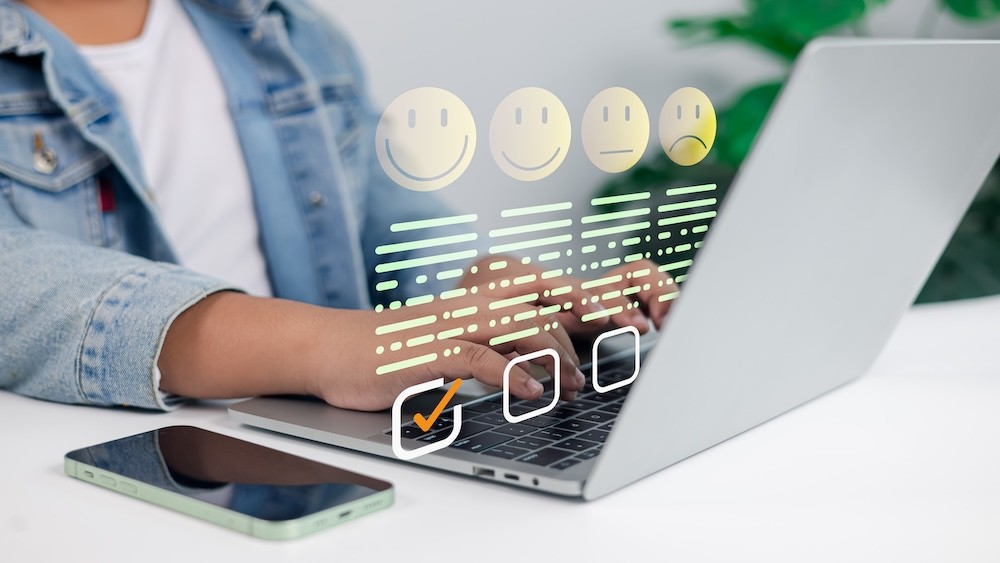
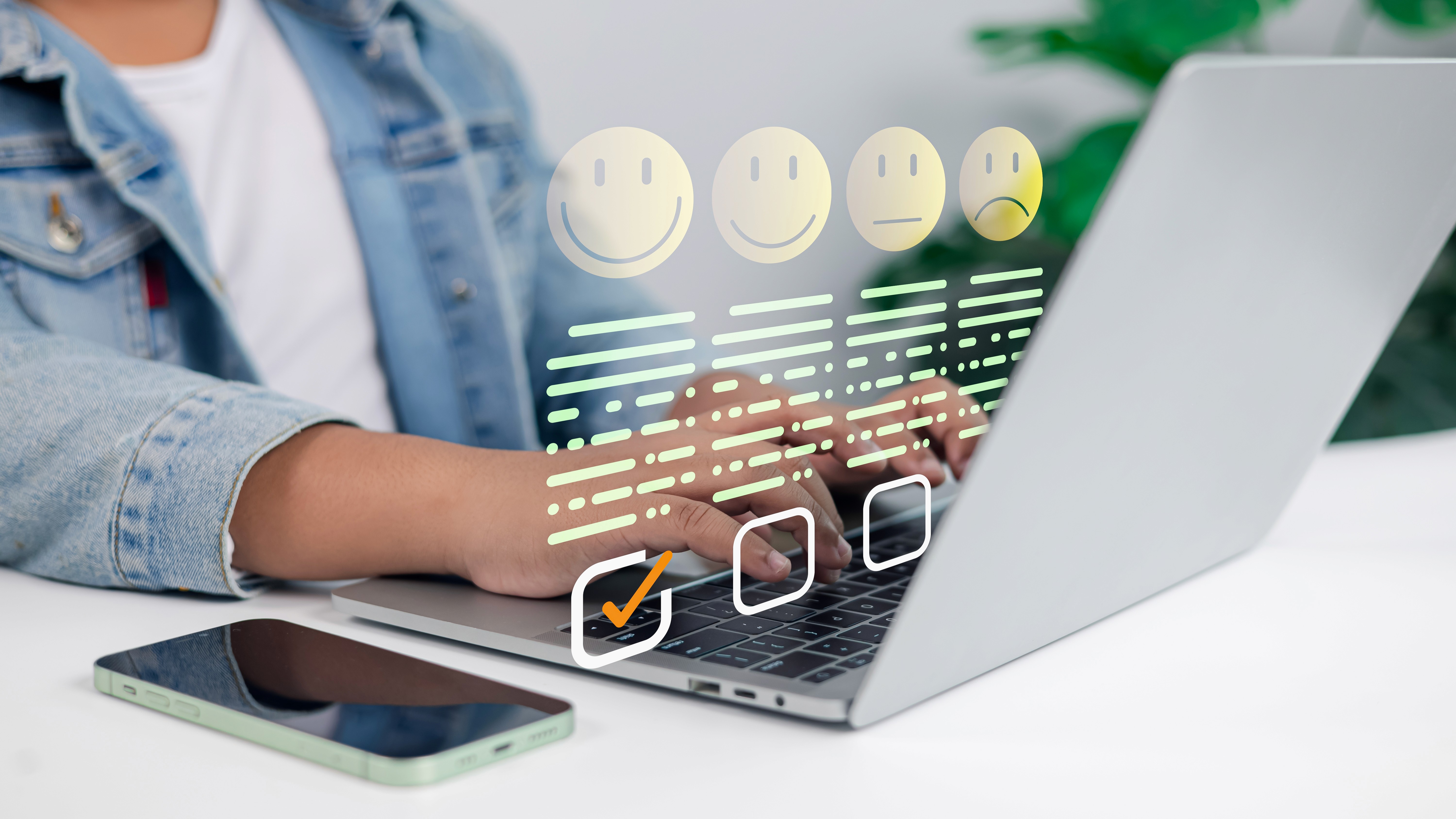
User Feedback Analysis

A person taps on a laptop with an overlaid rating scale from a laughing to a sad smiley, the first smiley is checked

User Feedback Analysis

A person taps on a laptop with an overlaid rating scale from a laughing to a sad smiley, the first smiley is checked

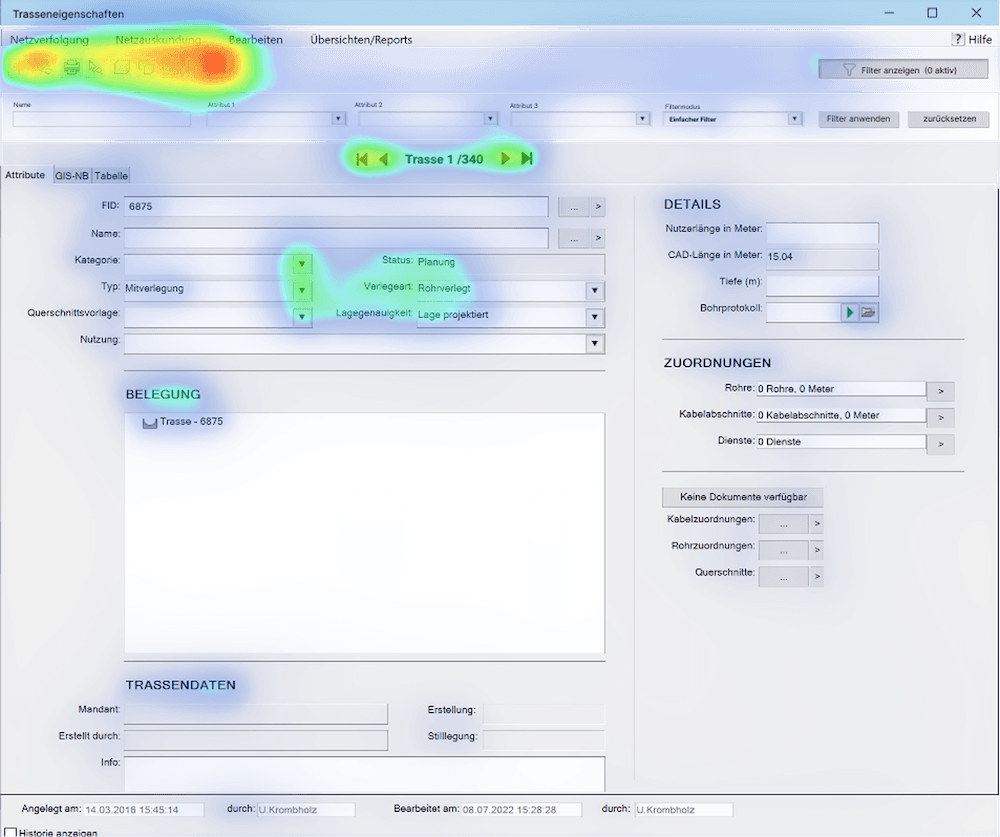
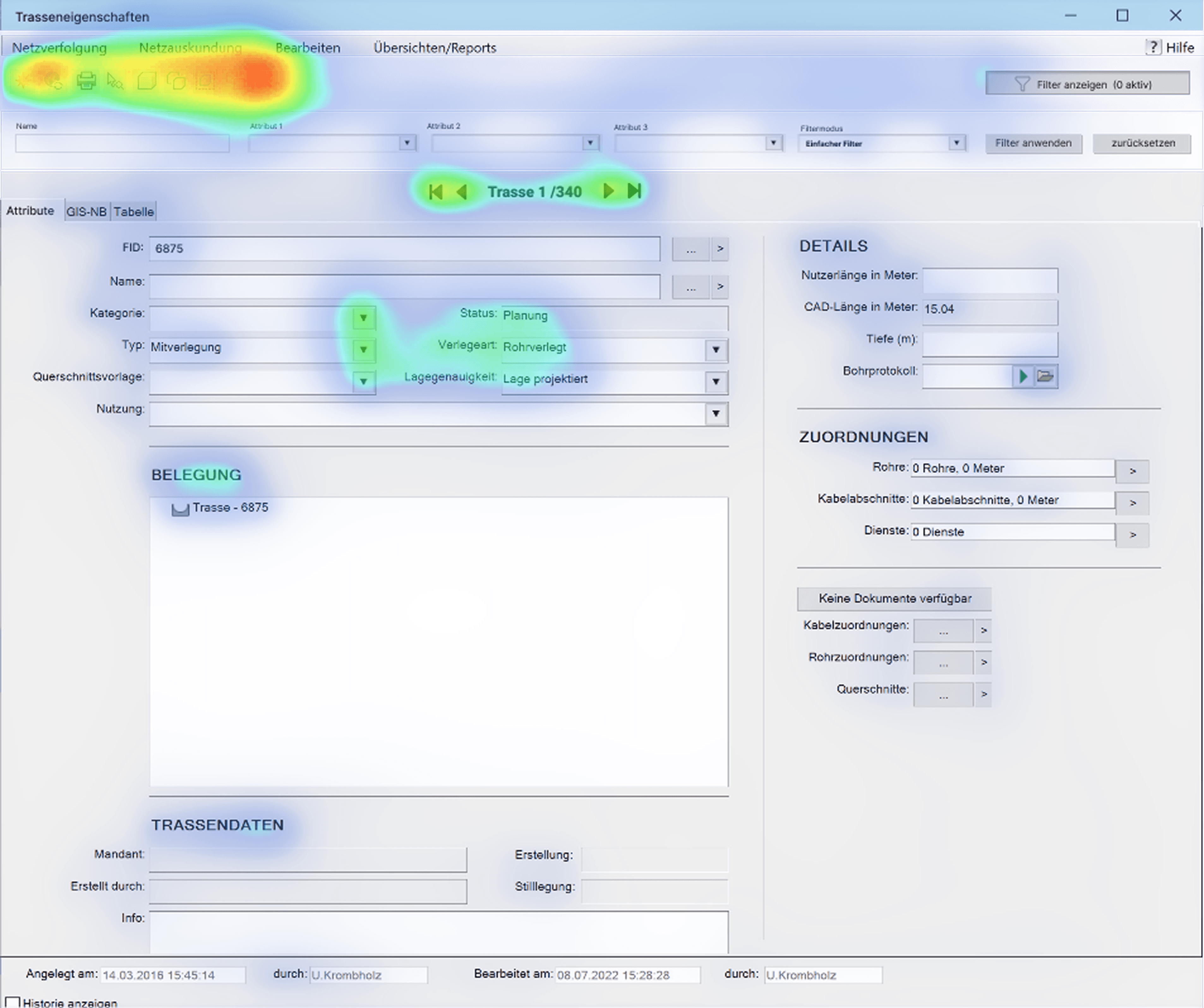
Heat and scroll maps

User interface of a software application with highlighted areas shown in a heatmap-style visualization, including the menu bar, route selection, and status information.

Tree testing

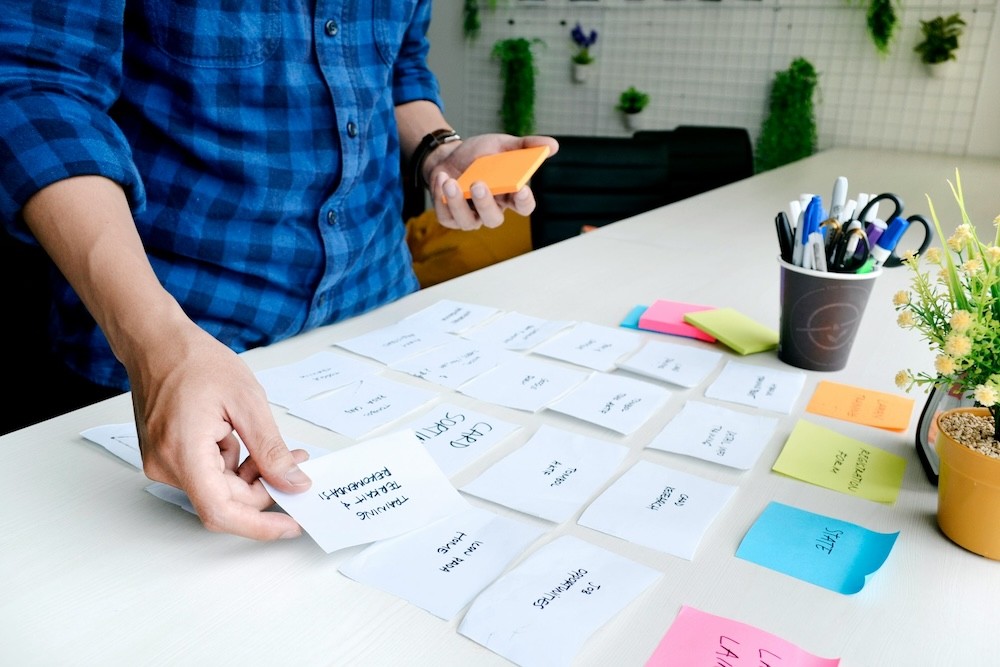
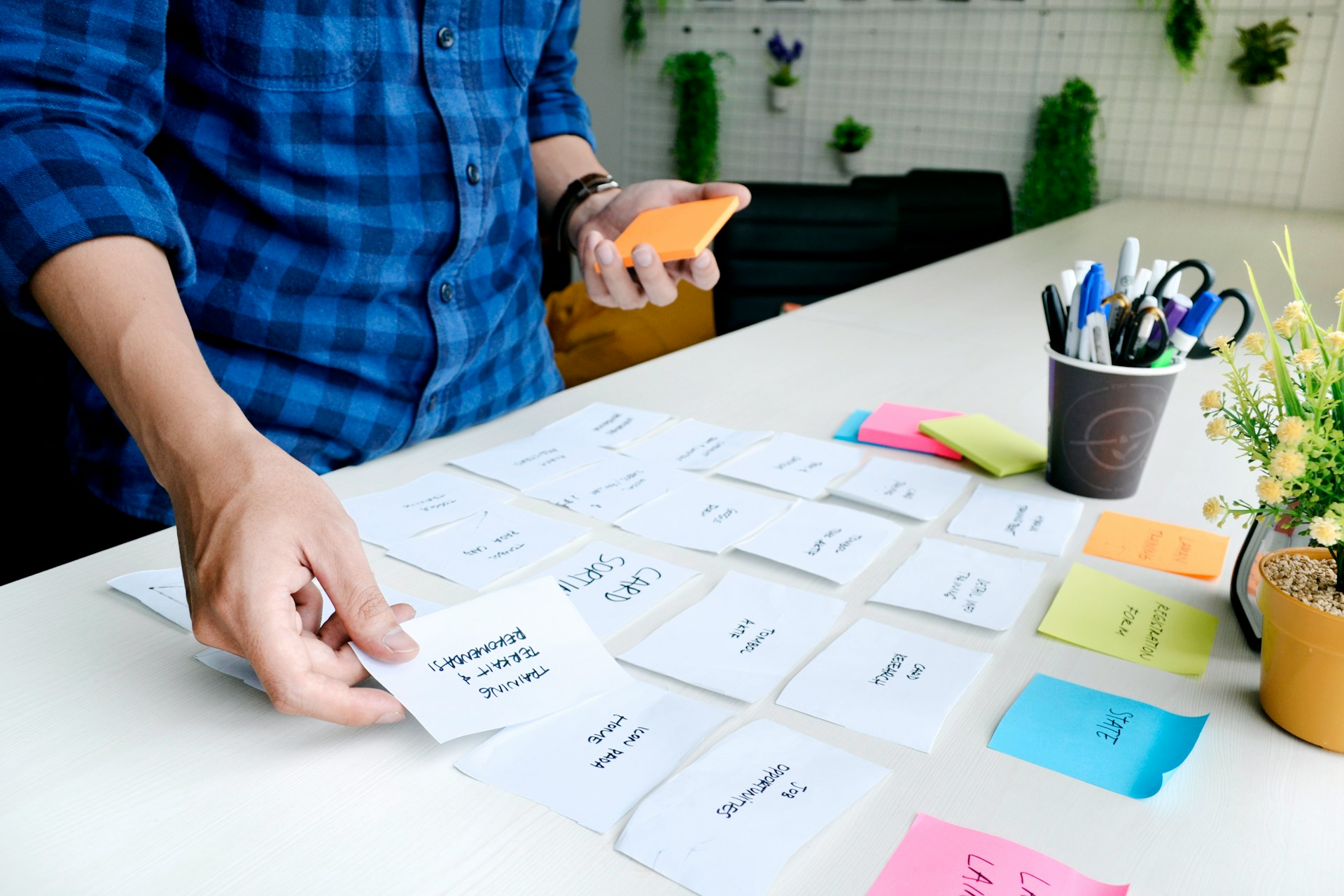
Card Sorting

Person in a blue plaid shirt arranges labeled white and colorful sticky notes on a white table with a pen cup and a plant in the background

Card Sorting

Person in a blue plaid shirt arranges labeled white and colorful sticky notes on a white table with a pen cup and a plant in the background

A/B Tests

Analysis tools

Eyetracking

Test events

At our usability test events, we invite customers and test participants to try out products, software—basically anything—in a relaxed atmosphere. It’s an entertaining, hands-on way to gather feedback while enjoying pizza, beer, and good conversation.


Person with short hair and a striped T-shirt sits smiling eagerly in front of a laptop with an Apple logo in a bright room with plants in the background

test interview

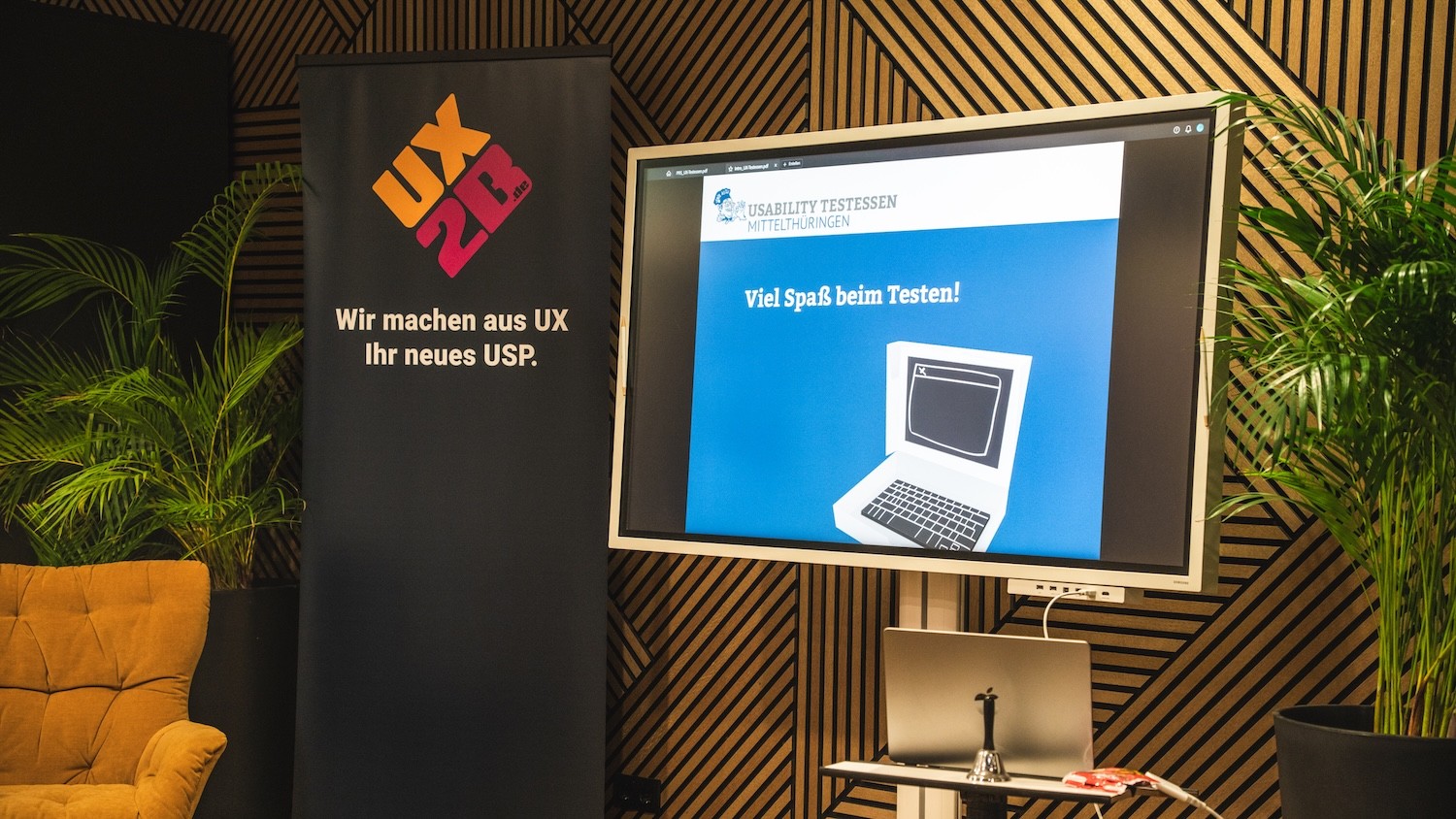
Modern room with a wood-paneled wall, two large plants, a yellow armchair, a banner reading 'We make UX your new USP.' and a screen showing a presentation with the text 'Enjoy testing!' and a stylized computer graphic.

Tasting 2024

Several rectangular pizza slices in open pizza boxes, a hand is taking out a slice

Testing with pizza and beer

Person in a turquoise T-shirt is sitting at a table and holding a hardware prototype in their hand

Hardware test

Several rectangular pizza slices in open pizza boxes, a hand is taking out a slice

Testing with pizza and beer

Person in a turquoise T-shirt is sitting at a table and holding a hardware prototype in their hand

Hardware test

FAQ

When is the right time for a user test?

How many users do we need for a test?

What is iterative design?

Can we test with our own team?

Nothing is ever final

Iteration brings clarity. We improve the design in cycles—and create the foundation for a smooth handoff to implementation.

Nothing is ever final

Iteration brings clarity. We improve the design in cycles—and create the foundation for a smooth handoff to implementation.

Loop.Lead.Love.

UX2B GmbH
Leutragraben 1 (JenTower)
07743 Jena, Germany

+49 (0) 3641 3163986
kontakt@ux2b.de

All rights reserved. © UX2B GmbH 2026

UX2B GmbH
Leutragraben 1 (JenTower)
07743 Jena, Germany

+49 (0) 3641 3163986
kontakt@ux2b.de

Loop.Lead.Love.

All rights reserved. © UX2B GmbH 2026