Iteration

Test, learn and refine

Why Usability Testing

Why Usability Testing

Why Usability Testing

Becoming a tester

Becoming a tester

Becoming a tester

Becoming a tester

Becoming a tester

Becoming a tester

Testing methods

Testing methods

Testing methods

Context analyses

Method mix - qualitative and quantitative

Context analyses

Method mix - qualitative and quantitative

Context analyses

Method mix - qualitative and quantitative

Replace assumptions with facts

Even the best team cannot think for all users. Tests show where real people behave differently than expected and whether the design concept works – in prototypes as well as in existing products. This makes blind spots visible before resources flow in the wrong direction.

Increase acceptance and adoption

Through prototypes validated by real users, development teams receive objective decision-making bases instead of opinions, and investments in UX measures are legitimized by measurable evidence. Tests make design decisions understandable and reduce internal discussions.

Compliance evidence for regulated products

In regulated industries (medical technology, lab equipment), usability tests are part of the required proof obligation. They provide objective evidence for usability and use-related risks – essential for IEC 62366-1 and Usability Engineering Files.

Identify risks early and reduce costs

Fixing errors in the finished product costs many times what testing at the prototype stage costs. User tests reveal critical weaknesses before they become expensive.

The most important steps of idea generation in the UX process

The most important steps of idea generation in the UX process

1

Study Design & Preparation

Definition of the research objectives, development of test scenarios and tasks, creation of screeners and test protocols. Coordination of the methodological approach with the specific questions.

1

Study Design & Preparation

Definition of the research objectives, development of test scenarios and tasks, creation of screeners and test protocols. Coordination of the methodological approach with the specific questions.

1

Study Design & Preparation

Definition of the research objectives, development of test scenarios and tasks, creation of screeners and test protocols. Coordination of the methodological approach with the specific questions.

1

Study Design & Preparation

Definition of the research objectives, development of test scenarios and tasks, creation of screeners and test protocols. Coordination of the methodological approach with the specific questions.

1

Study Design & Preparation

Definition of the research objectives, development of test scenarios and tasks, creation of screeners and test protocols. Coordination of the methodological approach with the specific questions.

1

Study Design & Preparation

Definition of the research objectives, development of test scenarios and tasks, creation of screeners and test protocols. Coordination of the methodological approach with the specific questions.

1

Study Design & Preparation

Definition of the research objectives, development of test scenarios and tasks, creation of screeners and test protocols. Coordination of the methodological approach with the specific questions.

1

Study Design & Preparation

Definition of the research objectives, development of test scenarios and tasks, creation of screeners and test protocols. Coordination of the methodological approach with the specific questions.

Why are we testing with real users?

Why under real conditions

Why adhere to established standards?

pink and white light illustration
blaue und rosa Lichtillustration
a pink and blue sky with a few clouds

Why are we testing with real users?

Designers and developers think differently than typical users – real tests reveal stumbling blocks that nobody can foresee. What seems "intuitive" in the team can fail in practice. Tests uncover issues early on, before changes become costly. They also show which features are truly used and where improvements have the greatest impact. And: users who are involved are more likely to use the solution later – and become advocates.

pink and white light illustration
blaue und rosa Lichtillustration
a pink and blue sky with a few clouds

Why are we testing with real users?

Designers and developers think differently than typical users – real tests reveal stumbling blocks that nobody can foresee. What seems "intuitive" in the team can fail in practice. Tests uncover issues early on, before changes become costly. They also show which features are truly used and where improvements have the greatest impact. And: users who are involved are more likely to use the solution later – and become advocates.

pink and white light illustration
blaue und rosa Lichtillustration
a pink and blue sky with a few clouds
Person in rosa Jacke sitzt an einem Tisch mit Laptop und Smartphone und zeigt Daumen hoch

Context analyses

Method mix - qualitative and quantitative

The most important steps of idea generation in the UX process

Idea generation is not just brainstorming – it is a structured part of the UX process, in which ideas are shaped, tested, and refined. It serves as a bridge between research and design, transforming insights into clear, user-centered solutions. Here are the essential steps:

The most important steps of idea generation in the UX process

Idea generation is not just brainstorming – it is a structured part of the UX process, in which ideas are shaped, tested, and refined. It serves as a bridge between research and design, transforming insights into clear, user-centered solutions. Here are the essential steps:

Quantitative Usability Tests focus on capturing measurable data to identify patterns, effectiveness, and efficiency in user behavior. They provide insights based on numbers and support data-driven design decisions.


Qualitative Usability Tests, on the other hand, investigate the reasons behind user actions by observing thoughts, motivations, and feedback. They uncover deeper usability issues that may be overlooked based solely on metrics, adding the necessary context to the numbers.

Quantitative Usability Tests focus on capturing measurable data to identify patterns, effectiveness, and efficiency in user behavior. They provide insights based on numbers and support data-driven design decisions.


Qualitative Usability Tests, on the other hand, investigate the reasons behind user actions by observing thoughts, motivations, and feedback. They uncover deeper usability issues that may be overlooked based solely on metrics, adding the necessary context to the numbers.

Zwei Personen sitzen an einem Holztisch, eine zeigt auf einen Laptop, die andere macht sich Notizen auf einem Klemmbrett

Loud thinking

Person in kariertem Hemd sitzt vor Laptop und zeigt mit beiden Händen nach oben

Loud thinking

Person tippt auf Laptop mit eingeblendeter Bewertungsskala von lachendem bis traurigem Smiley, erster Smiley ist angekreuzt

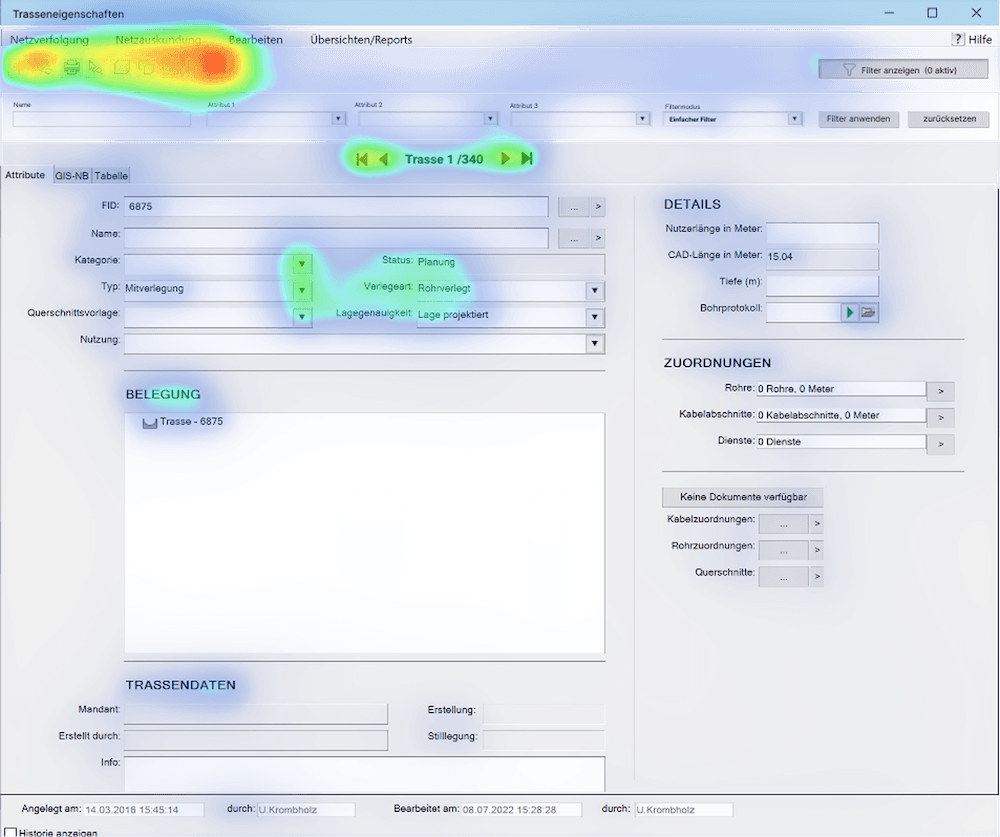
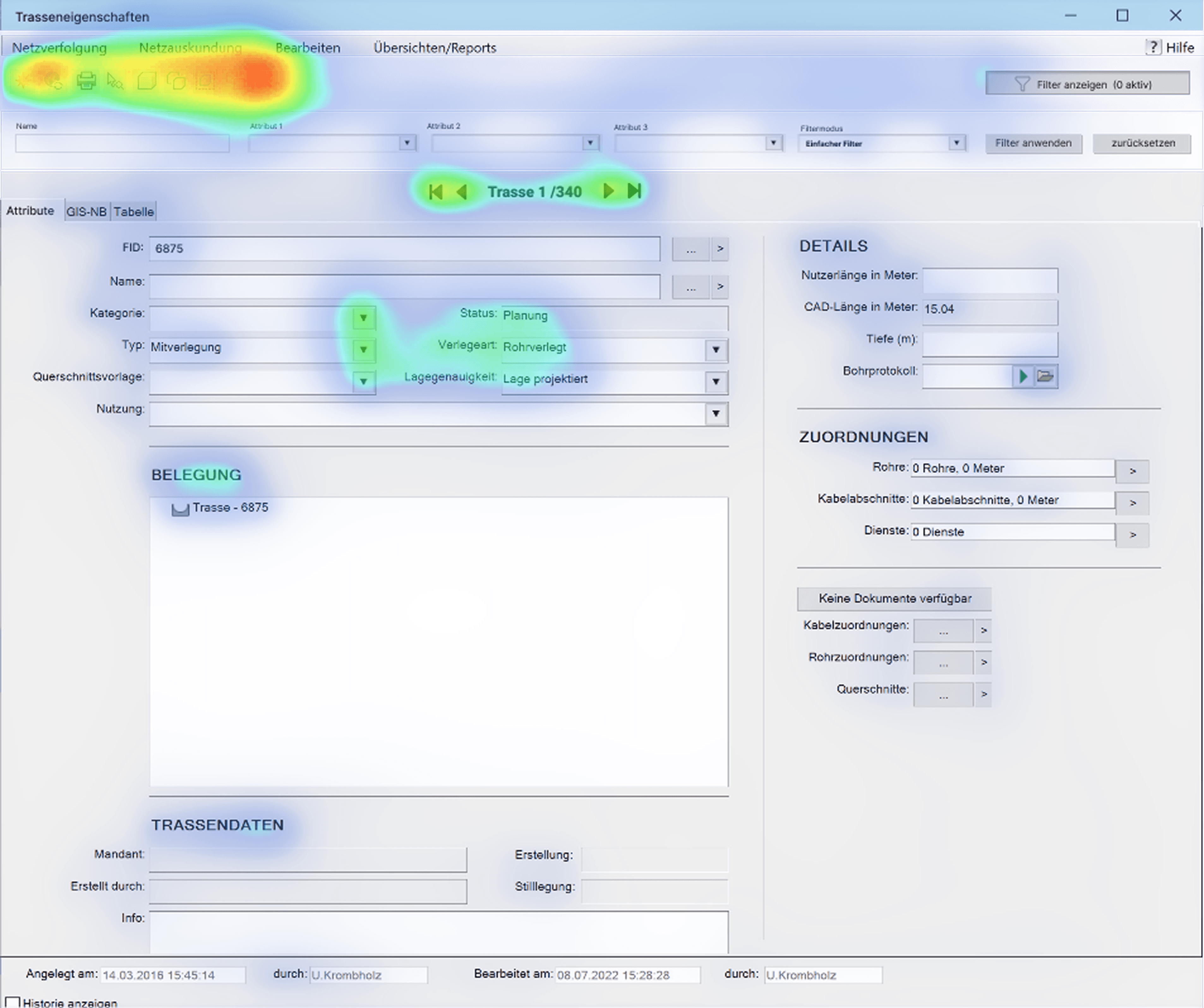
Heat and scroll maps

Benutzeroberfläche einer Software mit hervorgehobenen Bereichen durch eine Wärmebilddarstellung, darunter Menüleiste, Trassenauswahl und Statusinformationen.

A/B Tests

Analysis tools

Tree testing

Eyetracking

Card Sorting

Person in blauem Karohemd ordnet beschriftete weiße und bunte Notizzettel auf einem weißen Tisch mit Stiftebecher und Pflanze im Hintergrund

Card Sorting

Person in blauem Karohemd ordnet beschriftete weiße und bunte Notizzettel auf einem weißen Tisch mit Stiftebecher und Pflanze im Hintergrund

The most important steps of idea generation in the UX process

Idea generation is not just brainstorming – it is a structured part of the UX process, in which ideas are shaped, tested, and refined. It serves as a bridge between research and design, transforming insights into clear, user-centered solutions. Here are the essential steps:

Person mit kurzem Haar und gestreiftem T-Shirt sitzt gespannt lächelnd vor einem Laptop mit Apfel-Logo in einem hellen Raum mit Pflanzen im Hintergrund

Label

Moderner Raum mit Holzpaneelwand, zwei großen Pflanzen, einem gelben Sessel, einem Banner mit der Aufschrift 'Wir machen aus UX Ihr neues USP.' und einem Bildschirm, der eine Präsentation mit dem Text 'Viel Spaß beim Testen!' und einer stilisierten Computergrafik zeigt.

Label

Mehrere rechteckige Pizzastücke in offenen Pizzakartons, eine Hand nimmt ein Stück heraus

Label

Person in türkisfarbenem T-Shirt sitzt an einem Tisch und hält einen Hardware Prototypen in der Hand

Label

Context analyses

When is the right time for a user test?

How many users do we need for a test?

What is iterative design?

Can we test with our own team?

Nothing Is Ever Final

Iteration is where progress happens. Step back to see how designs begin, or look ahead to how they’re delivered.

Nothing Is Ever Final

Iteration is where progress happens. Step back to see how designs begin, or look ahead to how they’re delivered.

Loop.Lead.Love.

UX2B GmbH
Leutragraben 1 (JenTower)
07743 Jena, Germany

+49 (0) 3641 3163986
kontakt@ux2b.de

All rights reserved. © UX2B GmbH 2026

UX2B GmbH
Leutragraben 1 (JenTower)
07743 Jena, Germany

+49 (0) 3641 3163986
kontakt@ux2b.de

Loop.Lead.Love.

All rights reserved. © UX2B GmbH 2026